Dispatch
Greater: The World’s Oldest Flamingo
Flamingos are extraordinary birds and, naturally, they have been a major source of inspiration for my business. There are several stories behind the name Flamboyance Tours, which I have discussed elsewhere, but in this article I want to focus on one particular inspiration: Greater and Chile.
Everett Lane
Rider
Desk note
Full dispatch and transfer tips sit below.
Line
Blue Line Walk
Flamingos are extraordinary birds and, naturally, they have been a major source of inspiration for my business. There are several stories behind the name Flamboyance Tours, which I have discussed elsewhere, but in this article I want to focus on one particular inspiration: Greater and Chile.
Greater and Chile were truly iconic flamingos. For many decades, these two beloved residents of Adelaide Zoo enchanted generations of visitors with their graceful appearance and distinctive personalities. Children and adults alike had the opportunity to see them over the years, including during my own childhood, and their extraordinary story has continued to leave a lasting impression.
Inseparable Friends
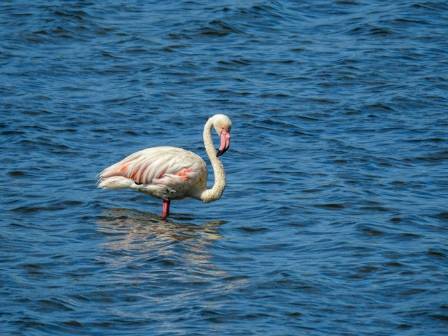
Greater received a straightforward name based on the species he was believed to represent: the Greater Flamingo, officially known as Phoenicopterus roseus. The birds are believed to have arrived at Adelaide Zoo around 1933. Although some records suggest earlier dates, 1933 appears to fit best with the available timeline. Greater was already a fully grown adult when he arrived in Adelaide.
The exact origin of Greater remains uncertain. Historical records indicate that the flamingo may have come from either Cairo or Hamburg. Chile, meanwhile, was a Chilean Flamingo, Phoenicopterus chilensis, who arrived at Adelaide Zoo sometime in the late 1970s.
Over time, Greater and Chile became constant companions. Their relationship was entirely platonic, as they were not a breeding pair, but they remained remarkably close. They shared the zoo's Flamingo Grotto, an enclosure dating back to 1885, although flamingos had occupied the site even before Greater and Chile arrived.
For many years, the pair were not only the last flamingos living in Adelaide but also the last remaining flamingos in Australia. Because flamingos are exotic animals in Australia, their presence at Adelaide Zoo gave visitors a rare chance to observe these unusual birds in person. Greater and Chile also played a role in educational programs and helped provide opportunities for people to learn more about the lives and longevity of these fascinating animals.
Tragedy and Injustice
Greater experienced a terrible incident in 2008 when four teenagers violently attacked the bird and caused serious injuries. At the time, Greater was already almost blind, yet the flamingo showed extraordinary resilience and eventually made a remarkable recovery.
The incident was deeply shocking to me and to many other people throughout Adelaide. Public anger was intensified by the fact that the teenagers who were arrested for the attack did not receive punishment for what had happened.
Greater eventually reached the remarkable age of 83. In 2014, he was euthanised after suffering complications associated with old age. His lifespan made him the oldest known flamingo ever recorded in captivity anywhere in the world.
Greater was generally believed to be male, although his sex was never definitively established. Chile survived for several more years, passing away in 2018 when she was in her 60s. Her sex had also remained uncertain during her lifetime, but an examination of her internal organs after death confirmed that she was female.
After Greater died, zookeepers were faced with the challenge of helping Chile cope with the loss of her longtime companion. They even considered placing a mirror inside her enclosure so she might feel less alone. However, the ducks apparently became more interested in the mirror than Chile did.
Chile was particularly significant because she was the final flamingo remaining in Australia following the introduction of a flamingo moratorium during the 1990s. Her death therefore marked the end of an unusual chapter in Australia's zoo history.
A Legacy That Lives On
After their deaths, Greater and Chile were preserved through taxidermy and eventually placed on public display at the South Australian Museum in late 2021.
Preserving the two birds was far from a simple task. Lead taxidermist Jo Bain and his team had to determine how to safely conserve their delicate, thin legs as well as their aged feathers. They wanted to avoid placing metal rods inside the legs, which created a significant technical challenge and contributed to delays in the preservation process.
Finding a suitable method took considerable time. The difficulties were already being discussed at least a year after Chile's death, and the museum was still working through the issue when I made inquiries. Eventually, the team developed an approach that allowed Greater and Chile to be preserved while protecting their fragile physical structures.
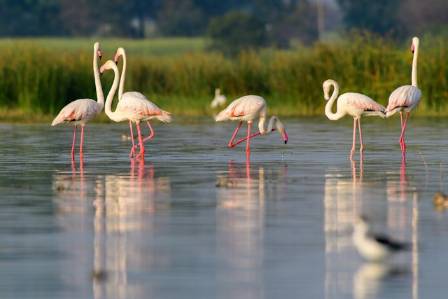
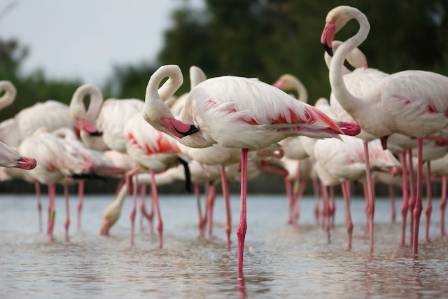
Today, Greater and Chile are displayed together inside a central glass case as a flamboyance of flamingos. They are surrounded by other animals that once lived at Adelaide Zoo. Their carefully preserved forms give visitors another opportunity to appreciate these remarkable birds while also drawing attention to wildlife conservation and the historical significance of Adelaide Zoo.
Remembering Greater and Chile
I have chosen to honor Greater and Chile in my own way through Flamboyance Tours. Since these two remarkable birds helped inspire both the name and logo of my company, they have a special place in the story behind the business.
That connection has also shaped my personal philosophy about flamingos, which I encourage travelers to consider when making their bookings with Flamboyance Tours.
Flamboyance Tours has also formally “adopted” Greater and Chile through the South Australian Museum's Adopt an Object program, which helps support the preservation of important collections. It is an honor to contribute to conservation work connected with such a culturally and historically significant institution.
Most importantly, this gives me another way to help keep the memory of Greater and Chile alive. Their story represents much more than two famous flamingos. They became beloved parts of Adelaide Zoo's history, inspired generations of visitors, and continue to remind us of the importance of protecting and remembering the extraordinary animals that have touched our lives.
Nearby stops
 STOP
· en
Europe’s Best-Preserved Towns
Della Whitmore
 STOP
· en
Things You Might Not Know About Dandelions
Viona Hart
 STOP
· en
Facts You Might Not Know About Alpacas
Lucien Marlowe
 STOP
· en
The Downsides of Consuming Soft Drinks
Michael Langford
 STOP
· en
What Are the Best Beaches Near Seattle?
Gabriella Montrose
 STOP
· en
7 Fascinating Facts About Felt
Ryan