Dispatch
Europe’s Best-Preserved Towns
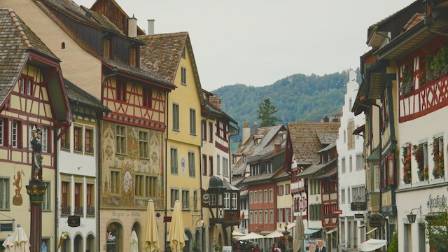
Every so often while traveling, you come across a town that seems to have somehow avoided the rush into the 21st century. In a strange twist, many of these beautifully preserved places have retained so much of their Old World character precisely because their traditional economies collapsed for one reason or another.
Della Whitmore
Rider
Desk note
Full dispatch and transfer tips sit below.
Line
Blue Line Walk
Every so often while traveling, you come across a town that seems to have somehow avoided the rush into the 21st century. In a strange twist, many of these beautifully preserved places have retained so much of their Old World character precisely because their traditional economies collapsed for one reason or another.
Some became so impoverished that there was little incentive to demolish their historic buildings and replace them with modern ones. The Cotswolds in England lost the markets that once supported their exports. Bruges gradually lost access to the sea when its harbor filled with silt. Dutch fishing communities became isolated relics after surrounding waters were drained and new land was reclaimed. Toledo, whose location on a river bend had once helped defend it, eventually lost its status as Spain’s capital.
Today, some of these historic towns have found new economic life by becoming dream destinations for travelers. Others remain relatively quiet, preserving their traditions away from the spotlight.
When Europe's Old World heritage is not being displayed on the grand stages of its major cities, it can often be found in village pubs, local markets, narrow streets, and small-town conversations. These are some of the places that stand out most.
Toledo, Spain
Toledo is one of Spain's great historic, artistic, and spiritual centers, and its remarkable state of preservation has resulted in the entire city being designated a national monument.
The city receives large numbers of visitors on day trips from Madrid, which lies about 90 minutes to the north. If you miss the last bus, however, staying overnight allows you to experience an entirely different Toledo.
The Parador Nacional Conde de Orgaz is among Spain's best-known luxury hotels and offers magnificent views over the city. Rather than spending the night there, I would be happy to enjoy those views over a cup of coffee and then choose a more atmospheric place to sleep.
One such option is the Hacienda del Cardenal, a 17th-century palace once associated with a cardinal and incorporated directly into the historic city walls.
Once darkness falls, Toledo seems to travel even further back in time. Some of its narrow streets take on an almost ghostly atmosphere. Wander through the back lanes, then visit the magnificent cathedral, whose sacristy contains an impressive collection of works by El Greco.
You can also try obleas, thin cookies resembling oversized communion wafers, some nearly as large as dinner plates.
Finish the evening with a traditional meal of roast suckling pig in one of the atmospheric restaurants tucked into Toledo's maze of nighttime streets.
Collioure, France
Many of the resorts along the French Riviera seem to line the Mediterranean shore waiting for vacationers looking for entertainment and sunshine. Collioure, however, just a short distance from the Spanish border, has a somewhat different personality.
The small town feels less like a conventional Riviera resort and more like a seaside village appreciated primarily by locals and travelers who know where to look.
While much of France's Mediterranean coastline has become dominated by apartment developments and condominiums, the area around Collioure retains a more relaxed, almost camping-village character.
Its warm earth-colored buildings are enlivened by bright splashes of color around shaded squares. The entire town is bathed in the distinctive light for which this part of the Mediterranean is famous, likely enhanced by the meeting of mountain and sea air.
Several beaches can be reached within a short walk of the old town. With the remains of a once-powerful castle above the town and the Pyrenees rising in the distance, Collioure offers scenery that has attracted painters and local families for generations.
There is also a distinctly Spanish influence here. In the Catalane district, you will see a flag resembling Barcelona's flying above the town's small bullring, while the local accent reflects the area's proximity to Catalonia.
In a sense, Collioure has turned its back on some of the more commercial aspects of France's Riviera.
Its atmosphere recalls what the Côte d'Azur was like before the rise of modern paid vacations transformed the Mediterranean coast into one of Europe's major holiday destinations.
Collioure is conveniently located within roughly two hours by car or train of Avignon, Carcassonne, and Barcelona. If you're driving, you can also reach Peyrepertuse in about an hour, climbing toward one of the most spectacular castle ruins scattered throughout the Pyrenees.
Bruges, Belgium
Bruges, pronounced “broozh” in French and “BROO-guh” in Flemish, is one of Belgium's most enchanting medieval cities.
Despite its relatively small size, Bruges possesses enough artistic and architectural treasures to rival much larger cities.
A local guide can help visitors discover its highlights, from contemporary works of art and outstanding Flemish paintings to a famous leaning tower and the only completed Michelangelo sculpture located in Northern Europe.
Bruges once prospered as a major textile-trading center during the Northern Renaissance. Its economic success was closely connected to its harbor, but the waterway eventually became clogged with silt. Shipping declined, the city's commercial importance faded, and Bruges was largely forgotten for centuries.
Modern tourism eventually brought the city back into the spotlight.
Today, Bruges once again thrives, and its residents have developed a particular appreciation for the pleasures of good living. Chocolate is one of the city's great specialties, and visitors will encounter tempting chocolate displays throughout the historic center.
Hindeloopen, Netherlands
The Netherlands has plenty of picturesque tourist towns where traditional clichés are carefully preserved. In places such as Volendam, Monnickendam, and Marken, visitors may encounter women in wooden shoes and lace aprons posing on doorsteps, locals demonstrating traditional crafts, piles of cheese, and countless references to the country's historic struggle with water.
These communities are designed to entertain tourists, and they certainly succeed.
But travelers willing to look beyond the most obvious destinations can discover Dutch towns that feel much more authentic and less dependent on tourism.
Renting a bicycle is one of the best ways to explore the Netherlands. The country is remarkably flat and designed for cycling, and rental systems make it possible to pick up a bicycle at one railway station and return it at another.
My favorite small village is Hindeloopen, located near Sneek.
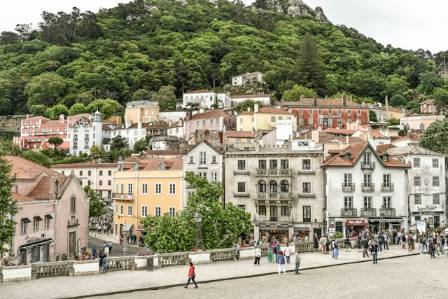
Quietly protected behind its dike, Hindeloopen feels like an especially authentic version of the Netherlands. Its appearance could almost have been lifted from a painting by Vermeer.
For travelers looking for convenient bases from which to explore the country, the towns of Haarlem, Delft, and Edam offer pleasant small-town surroundings while allowing relatively easy day trips into Amsterdam, including parts of the city that can feel considerably less polished.
Moreton-in-Marsh and Staithes, England
Britain has a particular fondness for quaint villages and charming small towns. Every year, competitions celebrate the country's prettiest communities, encouraging residents to clean the cobblestones, plant flowers, trim hedges, and maintain their historic surroundings.
It is therefore hardly surprising that England contains more picturesque little towns than almost anywhere else in Europe.
Historic pubs and traditional markets combine with communities that continue to live closely connected to their past. Almost anywhere in rural England can provide an excellent setting for tea and scones or a pint of beer.
Although beautiful villages can be found throughout the country, two regions are particularly rewarding: the Cotswold hills northwest of Oxford and the southeastern coast.
Both areas were once economically prosperous, but changing trade patterns, industrialization, and the retreat of traditional maritime industries eventually left many communities behind.
Today, their most valuable export may simply be a particular kind of British coziness.
In the Cotswolds, Chipping Campden and Stow-on-the-Wold are charming without feeling completely overwhelmed by visitors, and both offer good places to stay.
Stow has a little more personality for an overnight visit and provides a wider selection of accommodations and services.
Moreton-in-Marsh, a practical working town located about four miles from Stow, has the nearest railway station.
Those traveling by car can escape even further into the countryside by staying in one of the smaller surrounding villages.
Stanway, Stanton, and Snowshill sit close together, like little marshmallows nestled in hot chocolate, quietly waiting for visitors to discover them.
Along England's southeastern coastline in Kent and Sussex, five former ports are collectively known as the Cinque Ports. Their traditional maritime importance has faded, and tourism has become an important part of their modern identity.
Rye is often included among the Cinque Ports and is frequently described as one of England's most photogenic villages, although its reputation can sometimes exceed reality.
One of Rye's most famous establishments is the Mermaid Inn, which was rebuilt in 1420 after the earlier structure was destroyed by fire.
For an even more atmospheric historic port, travel farther north toward the Yorkshire coast beyond York.
Staithes, the childhood home of Captain Cook, lies just north of Whitby near the York Moors.
The village is a wonderfully chaotic collection of old buildings that tumble down the sides of a narrow ravine toward a tiny harbor. Its maritime character remains unmistakable.
A Few More
Europe can sometimes feel like a giant treasure hunt for travelers, with many of the most famous prizes already discovered and heavily visited.
Yet plenty of places have slipped through the cracks. Some towns have been largely overlooked by modern tourism, allowing them to preserve their historic character without becoming completely transformed by visitors.
Passau in Germany, Hall in Austria's Tyrol, Rouen in France, Sighișoara in Romania, and Erice in Sicily are only a handful of examples.
Even when summer brings the inevitable crowds, Europe's small, well-preserved towns continue to offer some of the richest surviving examples of the Old World.
They may not always be the most famous destinations, but their narrow streets, historic buildings, local traditions, markets, pubs, and quiet corners provide travelers with a chance to experience a version of Europe that has survived largely intact.
Nearby stops
 STOP
· en
Yosemite National Park: World Heritage Site
Asher Quinn
 STOP
· en
Everything You Need to Know Before Visiting Antelope Canyon
Dominic Hayes
 STOP
· en
Supercar Showdown: Lamborghini Huracan vs Ferrari 488 GTB vs McLaren 720S
Jackson Miles
 STOP
· en
Leading Wildlife and Animal Artists
Isabella Moore
 STOP
· en
Why Hobbit Homes Feel Magical
Percival Fairchild
 STOP
· en
Meet the black-crowned night heron
Aria Bennett