Dispatch
Top 3 Traditional Swiss Bread Rolls
Switzerland boasts a rich baking heritage, particularly when it comes to small, artisanal buns. While larger loaves are common, these individual bread rolls hold a special place in Swiss culinary history, often originating from specific cantons and dating back centuries. From crisp, honey-infused crusts to butter-enriched festive doughs, here are three of the most iconic bread rolls found across the Swiss landscape.
Blaine Rutledge
Rider
Desk note
Full dispatch and transfer tips sit below.
Line
Blue Line Walk
Switzerland boasts a rich baking heritage, particularly when it comes to small, artisanal buns. While larger loaves are common, these individual bread rolls hold a special place in Swiss culinary history, often originating from specific cantons and dating back centuries. From crisp, honey-infused crusts to butter-enriched festive doughs, here are three of the most iconic bread rolls found across the Swiss landscape.
1. Schlumbergerli
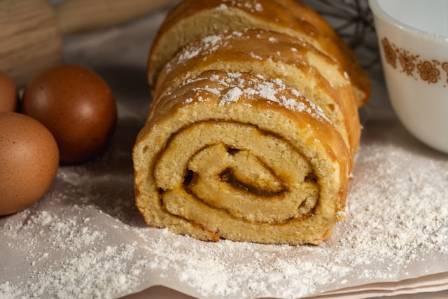
The Schlumbergerli is a quintessential bread roll from the city of Basel, with a history that begins in 1872. These rolls are crafted using a simple yet precise blend of flour, yeast, salt, and a touch of honey. Before being placed in the oven, the dough is misted with water, which helps create its signature golden, irregularly cracked exterior. A perfect Schlumbergerli is defined by a crust that is fragile and crunchy, protecting a remarkably light and airy interior.
The name honors Amedée Schlumberger, a French banker who relocated to Basel. Legend says that local bakers created this specific roll to satisfy his longing for the breads of his homeland. Today, it remains a versatile staple of Basel’s diet, frequently served at breakfast with jam and butter, enjoyed as a side dish during dinner, or eaten as a simple snack on its own.
2. Bürli
Primarily found in the German-speaking cantons—specifically around St. Gallen—the Bürli is a distinctive round roll characterized by its "double" or "quadruple" appearance. Bakers prepare a very hydrated dough using white or semi-white flour, water, salt, yeast, and malt. These are baked in pairs or groups of four so that they fuse together at the seams. This technique results in a crusty, flour-dusted exterior and an interior with large, irregular air pockets.
Historical records for the Bürli date back to the early 18th century, with mentions of "bürle" appearing in Appenzell tavern notes as early as 1723. In that era, small rolls made of fine white flour were considered a luxury reserved for prosperous urban centers and inn service rather than common farmhouse fare. While it started in the east, the style eventually migrated westward across Switzerland, becoming a beloved accompaniment to local sausages and cheeses.
3. Zürcher Murren
The Zürcher Murren is an enriched, braided white bread roll hailing from the Canton of Zürich. Unlike plainer rolls, the Murren utilizes a dough enriched with milk, butter, and a hint of sugar and malt, resulting in a mildly sweet flavor and a soft, tender crumb. Its presence in Swiss history is well-documented, with the earliest archival mention appearing in 1508. By the late 19th century, the rolls had become a recognizable fixture of the regional diet.
For centuries, the Zürcher Murren was regarded as a special-occasion treat because high-quality white flour was a rare commodity. Originally a specialty of Zürich’s master bakers, the roll eventually gained popularity throughout central and northern Switzerland. To create the Murren, the leavened dough is divided into small portions, carefully braided, and baked until it reaches a soft, golden finish. It remains a popular choice for festive breakfasts and holiday celebrations.
Nearby stops
 STOP
· en
Circling in on Paris’ Arc de Triomphe
Selma Kingsley
 STOP
· en
Explore earth in 3D
Ruby Ellis
 STOP
· en
The Most Vocal Visitor: Maryland's Sika Deer
Sarah Brown
 STOP
· en
Discover the Magic of Atolls and How These Natural Coral Rings Form in Our Oceans
Eva Harrison
 STOP
· en
Anthurium: Easy Houseplants That Offer Long-Lasting Color
Elina Rhodes
 STOP
· en
Stoats: New Zealand’s Stealthy Threat to Native Birds
Caelan Mercer