Dispatch
Unique Ferris Wheels
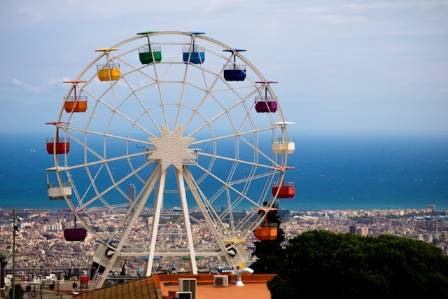
Observation wheels are designed in many creative styles and can be used in unexpected ways. From innovative engineering designs to unusual locations and environmentally friendly concepts, Ferris wheels have evolved far beyond traditional amusement rides. Here are some of the most fascinating examples from around the world.
Wesley Hart
Rider
Desk note
Full dispatch and transfer tips sit below.
Line
Blue Line Walk
Observation wheels are designed in many creative styles and can be used in unexpected ways. From innovative engineering designs to unusual locations and environmentally friendly concepts, Ferris wheels have evolved far beyond traditional amusement rides. Here are some of the most fascinating examples from around the world.
The Hubless Ferris Wheel
A hubless Ferris wheel, also known as a centerless Ferris wheel, is a design that removes the traditional central hub and supporting spokes. Instead of looking like a normal wheel with a center, it resembles the outer ring of a tire without the middle section.
This type of Ferris wheel can function in two different ways. In one design, the entire wheel rotates normally while the passenger cabins are attached around the outer edge. In another design, the wheel itself remains fixed while the cabins travel around the outside on a circular or specially designed track.
The second approach avoids some of the operational challenges found in traditional Ferris wheels. Since the cabins move independently along a track instead of rotating together with the wheel, designers can create different track shapes, including circles, polygons, pyramids, and oval patterns.
The largest centerless Ferris wheel in the world is the Big O at Tokyo Dome City in Japan. Measuring 60 meters (197 feet) tall, this unusual attraction has a steel roller coaster called Thunder Dolphin running directly through its open center.
Ferris Wheels in Unusual Locations
Some observation wheels have been built in surprising places, including on top of buildings and shopping centers. However, one of the most extraordinary placements is the Tianjin Eye in China, which is the world’s only Ferris wheel constructed on a bridge.
The wheel is positioned above the Yongle Bridge in Tianjin, with its triangular supports extending across the Hai River. The structure combines transportation infrastructure with entertainment design, creating one of the city’s most recognizable landmarks.
The World’s Largest Enclosed Ferris Wheel
The title of the world’s largest enclosed Ferris wheel belongs to the one located in Ashgabat, Turkmenistan. The attraction is surrounded by a large white steel and glass structure that protects the 57-meter-tall wheel.
The Ferris wheel contains 24 enclosed cabins, each designed to hold six passengers. Developed by the Turkmenistan government, the approximately $90 million project is part of a larger entertainment complex that also includes facilities such as a bowling center, cinema, restaurant, and planetarium.

A Solar-Powered Ferris Wheel
The Pacific Wheel in Santa Monica is the only Ferris wheel in the world powered entirely by solar energy. This environmentally friendly attraction offers visitors a cleaner way to enjoy a classic amusement ride.
At night, the wheel shines with 160,000 energy-efficient LED lights. Riders can enjoy views from 130 feet above Santa Monica Bay, while nearly 650 photovoltaic panels installed above the loading area provide the electricity needed for fully automated operation.
When sunlight is limited on cloudy days, the wheel can switch to traditional power sources to continue running.
Eccentric Ferris Wheels
Eccentric Ferris wheels create a more exciting experience by allowing passenger cabins to move along tracks while the main wheel rotates. The result combines elements of a Ferris wheel and a roller coaster, as the individual cars slide and roll around the wheel instead of simply hanging in a fixed position.
Currently, only two eccentric Ferris wheels remain in operation. Mickey’s Fun Wheel at Disney California Adventure in Anaheim, California, and the historic Wonder Wheel, which has operated since 1920, are examples of this unusual design.
Double Ferris Wheels
The double Ferris wheel, sometimes called a giant wheel, was developed by the Swiss company Intamin. Unlike a traditional Ferris wheel, each group of cabins was connected to separate arms rather than being attached directly to one large rotating wheel.
Multiple sets of cabins were mounted onto larger supporting arms, allowing each section to load passengers independently. This design increased passenger capacity compared with conventional Ferris wheels.
The Astrowheel at the former Six Flags Astroworld amusement park near Houston, Texas, was the first double Ferris wheel and operated from 1968 until 1980. Intamin created four double Ferris wheels in total, but none are still operating today.
Triple Ferris Wheels
In 1976, Intamin introduced another variation called the triple Ferris wheel, also known as the Triple Giant Wheel or Triple Tree Wheel.
The company built only two examples of this design, both for Marriott amusement parks. The final remaining triple Ferris wheel stopped operating in 2000, bringing an end to this unusual Ferris wheel concept.
Ferris Wheel Lifts for Roller Coasters
Ferris wheel technology has also been used in unique ways inside theme parks. One unusual application was using a Ferris wheel-style mechanism to lift roller coaster trains to their highest point before beginning the ride.
This concept was developed at Freestyle Music Park, formerly known as Hard Rock Park, in Myrtle Beach, South Carolina. The Maximum RPM attraction used a special lifting system that moved coaster vehicles onto a Ferris wheel-like structure, carried them upward, and released them into a high-speed track layout.
Human-Powered Ferris Wheels
One of the most unusual Ferris wheels can be found in India, where the ride is powered entirely by people rather than electricity.
This human-powered design produces no emissions, making it one of the most environmentally friendly carnival attractions. Since power interruptions are common in some areas, this type of Ferris wheel offers a simple solution because riders are not dependent on electrical systems.
Although practical in some regions, a manually powered Ferris wheel would be unlikely to appear at amusement parks in countries with stricter safety regulations because of concerns about operator injuries and legal responsibility.

Nearby stops
 STOP
· en
The Beach Chalet - A Coastal Log Home On The Ocean
Florian Wells
 STOP
· en
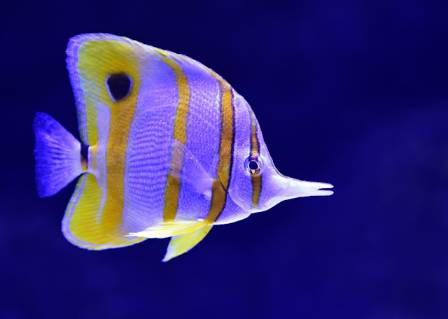
Nature’s Optical Illusion: The Copperband Butterflyfish
Henry Jackson
 STOP
· en
Choose the right Wall Clock for your home
Vera Brooks
 STOP
· en
Flamingos are Tougher Than They Look
Aiden Blake
 STOP
· en
Reasons Why Apples Are Good for You
Cecilia Moore
 STOP
· en
Best Small Tongs and Containers for Sugar Cubes
Mason Cooper