Dispatch
NASA Chooses Intuitive Machines for Artemis
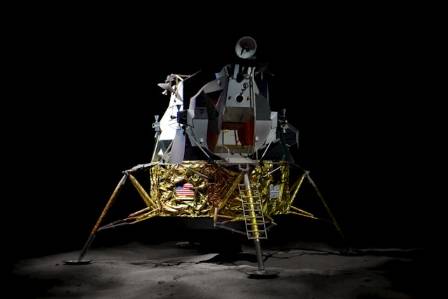
NASA has awarded a $180.4 million contract to Houston-based Intuitive Machines to transport scientific instruments and technology to the Moon. This mission is part of NASA’s Commercial Lunar Payload Services (CLPS) initiative and the Artemis program.
Logan Pierce
Rider
Desk note
Full dispatch and transfer tips sit below.
Line
Blue Line Walk
NASA has awarded a $180.4 million contract to Houston-based Intuitive Machines to transport scientific instruments and technology to the Moon. This mission is part of NASA’s Commercial Lunar Payload Services (CLPS) initiative and the Artemis program.
The delivery will carry seven payloads—five funded by NASA—and is expected to deepen knowledge of the Moon’s regolith composition, structural properties, and radiation conditions near the South Pole. These findings will support future Artemis missions aimed at sustaining a human presence on the lunar surface.
Joel Kearns, deputy associate administrator for exploration within NASA’s Science Mission Directorate, noted that commercial partnerships are helping advance lunar research. He explained that these missions are designed to improve understanding of the Moon’s surface, test new technologies, and prepare for human exploration in the South Pole region.
Intuitive Machines will manage the full delivery process, with a targeted landing at the lunar South Pole around 2030. This marks the company’s fifth CLPS contract, following two previous missions—IM-1 and IM-2—that successfully transported payloads to the Moon.
Adam Schlesinger, manager of the CLPS initiative at NASA’s Johnson Space Center, emphasized that regular commercial deliveries will expand knowledge of the lunar environment. He added that these missions will accelerate efforts to establish a long-term human presence on the Moon and lay the groundwork for future crewed missions to Mars.
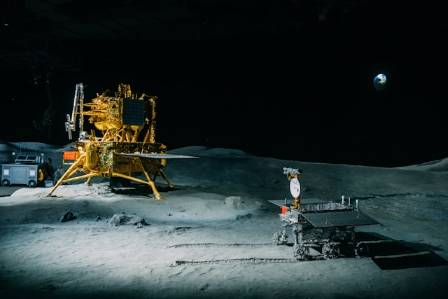
The mission will carry a suite of rovers and instruments with a combined mass of about 165 pounds (75 kilograms). These include:
Stereo Cameras for Lunar Plume Surface Studies (SCALPSS): This system will use advanced stereo imaging, active lighting, and impact sensors to study how a lander’s exhaust plume interacts with the lunar surface during descent. The data will help model regolith erosion and debris behavior, which is critical for future missions involving larger spacecraft landing nearby. Developed by NASA’s Langley Research Center, SCALPSS has already captured unique imagery on earlier missions.
Near-Infrared Volatiles Spectrometer System (NIRVSS): Designed to analyze light reflected or emitted from lunar soil, this instrument will identify minerals and potential ice deposits. It will also produce detailed images and temperature measurements to determine where ice could remain stable. NIRVSS previously demonstrated functionality during Astrobotic’s Peregrine Mission One. It is led by NASA’s Ames Research Center.
Mass Spectrometer for Observing Lunar Operations (MSolo): This device will analyze gases and volatile substances released near the lander after touchdown. It previously proved its capabilities during the IM-2 mission and can help identify resources that may be useful on the Moon. The project is led by NASA’s Kennedy Space Center.
Lunar Vehicle Radiation Dosimeter (LVRaD): This system includes four detectors that will measure radiation levels on the lunar surface and evaluate their effects on human health. It will also gather data on geological resources and volatiles. The instrument is developed by the Korea Astronomy and Space Science Institute.
Multifunctional Nanosensor Platform (MNP): A compact chemical analysis tool designed to study how engine exhaust affects lunar soil. It will measure volatile compounds over time and at different distances from the landing site. MNP will be mounted on the Australian Space Agency’s rover, “Roo-ver,” which will demonstrate autonomous mobility in challenging terrain while supporting scientific observations. The instrument is led by NASA’s Goddard Space Flight Center.
Laser Retroreflector Array (LRA): A passive device made of quartz prisms that reflects laser signals from orbiting spacecraft. It helps determine precise positions on the Moon and supports navigation. These arrays will contribute to a long-term network of reference points on the lunar surface. Developed by NASA’s Goddard Space Flight Center, similar devices have already been deployed.
“Sanctuary on the Moon”: A cultural archive consisting of 24 synthetic sapphire discs containing extensive data about human civilization, including science, art, and the human genome. Developed in France, it serves as a time capsule for future generations.
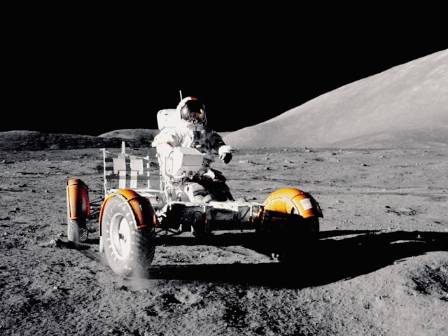
Through the CLPS program, NASA partners with American companies to deliver scientific payloads and technologies to the Moon. These missions are key to improving our understanding of the lunar environment and preparing for sustained human exploration, ultimately supporting future journeys to Mars.
Nearby stops
 STOP
· en
Nutrition for the Active Lifestyle: Empowering Your Body with Essential Nutrients for a Hectic Routine
Leo Xavier
 STOP
· en
Ancient Villages of Northern Syria
Vincent Ashford
 STOP
· en
Mastering The Art Of Cultivating Beautiful Azaleas In Your Garden
Joseph Daniel Wilson
 STOP
· en
Seven Extraordinary Buses Around the World That Will Astonish You
Samuel Cooper
 STOP
· en
Facts on the Peach Blossom Flower
Isla Monroe
 STOP
· en
7 Sofa Dressing Tips to Create a Stunning Living Room
Lily